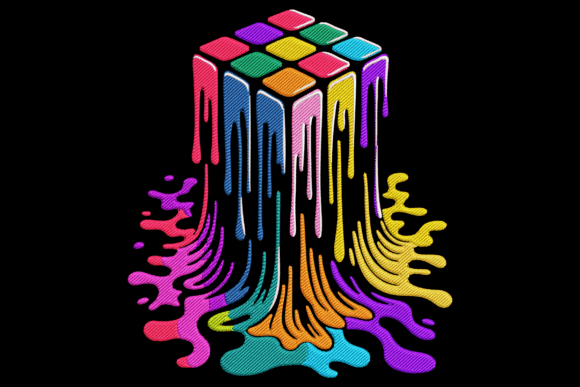
Melting Rainbow Cube: A Designer’s Review for Business Merch
As an embroidery designer who has spent years digitizing and testing files for commercial use, I approach every new machine embroidery design with a critical eye. It is not just about whether a pattern looks cute on a screen; it is about how it performs on fabric, how it elevates a brand, and whether it holds up under the stress of daily wear and washing. Today, I am reviewing the Melting Rainbow Cube, a piece that promises to give fabrics a charming update with a fun and quirky flair. For small business owners, Etsy sellers, and apparel decorators, understanding the practical application of this design is crucial before adding it to your product line.
First Impressions: Visual Personality and Brand Fit
The title Melting Rainbow Cube immediately suggests a blend of geometric structure and playful fluidity. In the world of branding, this juxtaposition is powerful. It feels modern yet approachable, striking a balance between professional polish and handmade warmth. When I first examined the concept, I noted its potential to serve as a standout element for creative industries. It does not scream "corporate stiff," nor does it feel too childish for adult audiences. Instead, it occupies a sweet spot that is ideal for boutiques, creative studios, bakeries, and local businesses looking to inject personality into their small business merch.
This design falls under the School category in some directories, which often implies a level of simplicity and clarity suitable for educational or youthful contexts. However, do not let that limit your vision. The "melting" aspect adds a layer of artistic sophistication that can elevate standard Embroidery projects into statement pieces. It feels decorative enough to be a focal point but structured enough to remain legible from a distance.
Real-World Applications for Small Businesses
The true test of any digital embroidery file is its versatility. Here is how I envision the Melting Rainbow Cube performing in real commercial scenarios:
- Branded Patches: This is perhaps the strongest use case. An embroidered patch featuring this design can be ironed or sewn onto denim jackets, canvas totes, or laptop bags. The rainbow elements allow for vibrant thread choices that catch the eye, making it perfect for event merch or customer gifts.
- Staff Uniforms and Aprons: For a café or florist, placing this design on the chest pocket of an apron embroidery project adds a touch of whimsy without overwhelming the uniform. It signals creativity and attention to detail, enhancing brand identity instantly.
- Cap Embroidery: The cube shape offers a contained area that works well on the front panel of a baseball cap. However, due to the curved surface, careful digitizing is required to ensure the "melting" effect does not distort uncomfortably.
- Tote Bag Design: Canvas bags are a staple for handmade brands. Using this as a central tote bag design element transforms a simple utility item into a walking advertisement. The quirky flair mentioned in the description aligns perfectly with the eco-conscious, artisanal vibe of tote users.
- Product Packaging Accents: Imagine this stitched onto a small fabric tag attached to your packaging. It serves as a premium finish that increases the perceived value of the finished product.
Technical Considerations and Production Notes
While the aesthetic appeal is high, technical execution is where many small businesses stumble. As a designer, I must advise caution regarding specific production variables. Since the product description does not provide exact stitch counts or hoop sizes, you must verify these details before purchasing or producing.
Stitch Density and Fabric Texture: The term "melting" implies soft edges or flowing lines. If the stitch density is too high, it can cause puckering, especially on lighter fabrics like t-shirts or towels. Always test on a scrap piece of your actual material. For textured fabrics like terrycloth towels, a cut-away stabilizer is non-negotiable to maintain the integrity of the design.
Color Contrast and Thread Choices: The rainbow element relies heavily on thread colors. On dark uniforms, ensure there is enough contrast. You might need to add an underlay or choose brighter rayon threads to make the colors pop against navy or black fabric. Conversely, on white tees, pastel threads might get lost, so consider saturating the colors for better visibility.
Size Limitations: Be mindful of small patch sizes. Intricate details in the "cube" structure may merge if scaled down too far. I recommend creating a printable mockup at 100% scale to check legibility. If the design includes fine lines, ensure they are above the minimum threshold for your embroidery machine’s needle size.
Impact on Brand Identity and Customer Trust
Consistency is key to building trust. When you use a cohesive set of design assets like the Melting Rainbow Cube across your custom apparel, social media, and packaging, you create a recognizable visual language. Customers associate this playful, high-quality embroidery with professionalism and care. It tells them that you are not just selling a product; you are offering an experience.
For Etsy sellers and crafters, unique embroidery sets you apart from print-on-demand competitors. A handmade look, achieved through proper hooping and stabilizer use, signals authenticity. This design, with its charming and quirky nature, encourages buyer engagement. People are more likely to share photos of unique, embroidered items on social media, providing free marketing for your brand.
Practical Checklist Before Production
Before you run a full batch of commercial embroidery orders, follow these steps:
- Test in Black and White: Convert the design to monochrome in your software to check for spacing issues and outline clarity.
- Verify Commercial Licensing: Ensure the license allows for the number of units you plan to produce. Never assume; always read the terms.
- Hoop Size Confirmation: Match the design dimensions to your available hoops. Do not attempt to resize beyond recommended limits without re-digitizing.
- Stabilizer Selection: Choose the right stabilizer for your fabric type—cut-away for stretchy knits, tear-away for stable wovens.
- Client Approval Mockups: If working with B2B clients, present a digital mockup alongside a physical sample to manage expectations.
In conclusion, the Melting Rainbow Cube is a versatile asset for any creative business. It bridges the gap between playful aesthetics and professional application. By paying attention to technical details like stitch density, thread contrast, and fabric compatibility, you can leverage this design to create memorable, high-value merchandise that strengthens your brand identity and delights your customers.